
Introduction
Bernard Arnault and Oliver Zipse have shaped two important parts of the global economy: luxury goods and automobile manufacturing. Although they followed different career paths, both built their reputations through long-term business leadership, strategic planning, and a strong focus on innovation.
Arnault is known for developing LVMH into a global luxury group with famous fashion, beauty, jewelry, and beverage brands. Zipse spent more than three decades at BMW, helping the German automaker navigate technological change and global competition.
Understanding Bernard Arnault and Oliver Zipse offers useful lessons about leadership, brand development, customer expectations, and the future of international business.
Quick Facts
| Detail | Bernard Arnault | Oliver Zipse |
|---|---|---|
| Full Name | Bernard Jean Étienne Arnault | Oliver Zipse |
| Birth Date | March 5, 1949 | February 1964 |
| Age (November 2026) | 77 years | 62 years |
| Birthplace | Roubaix, France | Heidelberg, Germany |
| Nationality | French | German |
| Profession | Businessman | Business Executive and Engineer |
| Education | École Polytechnique | Technical University of Darmstadt; Executive MBA |
| Known For | LVMH | BMW Group |
| Major Industry | Luxury Goods | Automotive |
| Leadership Role | LVMH Chairman and CEO | Former BMW Chairman |
| Family | Married, five children | Personal details not included here |
Bernard Arnault: Early Life and Family Background
Bernard Arnault was born on March 5, 1949, in Roubaix, France. He grew up in a business-oriented family. His father, Jean Arnault, worked in construction, which gave Bernard early exposure to business operations and management.
His early environment helped develop his interest in business and long-term investment. Rather than entering the fashion industry immediately, he first pursued an education in engineering.
His background later influenced his approach to building companies, combining financial discipline with an interest in design, craftsmanship, and brand identity.
Education and Early Interests
Arnault studied at École Polytechnique, one of France’s respected engineering institutions. After graduating, he joined his family’s construction business, Ferret-Savinel.
He gradually moved into management and became chairman of the company in 1978. His experience in construction and property helped him understand investment, business structure, and financial planning.
These skills became valuable when he later entered the luxury market.
Bernard Arnault’s Career Journey and LVMH Breakthrough
Arnault entered the luxury industry through Financière Agache in 1984. He reorganized the business and focused on developing Christian Dior as a central luxury brand.
In 1987, Moët Hennessy and Louis Vuitton merged to form LVMH. Arnault became its majority shareholder in 1989 and took the position of Chairman and CEO.
Under his leadership, LVMH expanded its portfolio across several luxury categories.
Its well-known brands include:
- Louis Vuitton
- Christian Dior
- Givenchy
- Sephora
- Bulgari
- Moët & Chandon
One important part of Arnault’s business approach involves maintaining each brand’s individual identity while benefiting from the resources of a larger group.
For example, Louis Vuitton can focus on leather goods and fashion while Sephora operates in beauty retail. Both brands benefit from the wider group’s international experience and business network.
Oliver Zipse: Early Life and Education
Oliver Zipse was born in February 1964 in Heidelberg, Germany. His education combined technology, engineering, and business management.
From 1983 to 1985, he studied computer science and mathematics at the University of Utah in the United States. He later earned a mechanical engineering degree from the Technical University of Darmstadt.
He also completed an Executive MBA through WHU Koblenz and the Kellogg School of Management.
This combination of technical and business education prepared him for a career in the automotive industry, where engineering decisions and commercial goals must work together.
Oliver Zipse’s Career Journey at BMW
Zipse joined BMW in 1991 as a trainee in development and production. During his early career, he worked in several technical and management positions.
His professional journey included assignments in Munich and South Africa. He also served as managing director of BMW’s Oxford plant in the United Kingdom.
In 2015, he joined BMW’s Board of Management, taking responsibility for production. On August 16, 2019, he became Chairman of the Board of Management.
During his leadership, BMW faced several major challenges, including the COVID-19 pandemic, changing customer expectations, digital technology, and the growing electric vehicle market.
One of the major projects associated with his leadership was BMW’s Neue Klasse. This vehicle platform represents a major step in the company’s plans for electric mobility, software, and future vehicle technology.
Zipse completed his tenure as chairman on May 13, 2026, after 35 years with BMW. Milan Nedeljković succeeded him the following day.
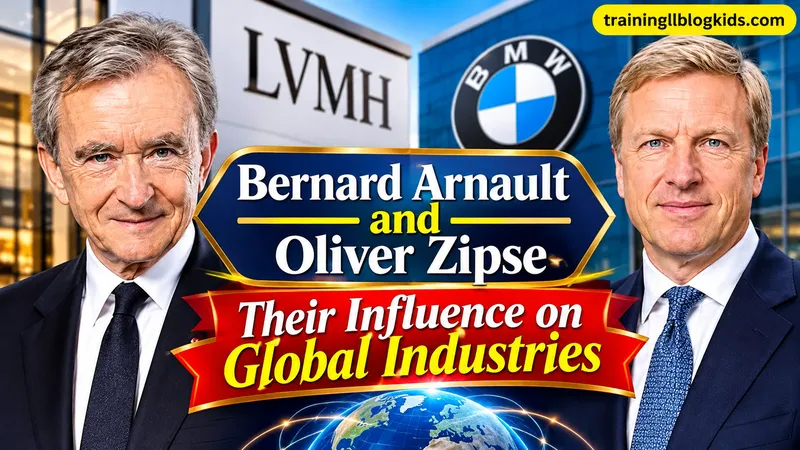
Bernard Arnault and Oliver Zipse: Their Influence on Global Industries
The influence of these two executives becomes clearer when we examine the industries they helped shape.
Arnault’s work demonstrates how luxury companies can grow through brand management, selective acquisitions, and international expansion. Luxury customers often purchase products for more than practical use. They also value craftsmanship, design, reputation, and brand history.
His strategy shows why protecting a brand’s identity matters when a company expands into new markets.
Zipse’s influence comes from a different direction. Automotive companies must balance engineering quality, production costs, environmental goals, and customer demand. His time at BMW highlighted the importance of adapting established manufacturers to electric mobility and digital technology.
For example, a modern automaker must think beyond building reliable vehicles. It must also consider battery technology, software features, charging systems, and manufacturing efficiency.
Both leaders show that successful businesses must understand what customers value while preparing for changes in their industries.
Comparing Their Leadership Styles and Business Strategies
Arnault and Zipse worked in different business environments, but their careers reveal several shared leadership principles.
1. Long-Term Planning
Arnault developed LVMH through brand expansion and long-term investment. Zipse focused on maintaining BMW’s competitive position through technology and manufacturing development.
2. Innovation
Arnault supported growth across fashion, beauty, jewelry, and hospitality. Zipse emphasized automotive technology and electric mobility.
3. Global Competition
Both executives understood the importance of international markets. LVMH sells luxury products worldwide, while BMW serves customers across major automotive markets.
Their careers also demonstrate that leadership requires different skills depending on the industry. Luxury companies depend heavily on brand value, while automakers must combine customer experience with engineering and production expertise.
Major Achievements and Contributions
Bernard Arnault’s major achievements include:
- Building LVMH into a major international luxury group.
- Expanding its portfolio across multiple luxury categories.
- Strengthening the global position of Christian Dior and Louis Vuitton.
- Supporting arts and culture through the Fondation Louis Vuitton, initiated in 2006.
Oliver Zipse’s major contributions include:
- Spending 35 years with the BMW Group.
- Leading BMW as chairman from 2019 to 2026.
- Guiding the company through the COVID-19 crisis.
- Supporting the Neue Klasse strategic project.
- Contributing to BMW’s production and technology development.
Personal Life and Interesting Facts
Here are some verified details about their lives and careers:
- Arnault studied engineering before entering the luxury business.
- He has five children and is married.
- He initiated the Fondation Louis Vuitton in 2006.
- Zipse studied in both Germany and the United States.
- Zipse worked in several BMW locations before becoming chairman.
These details show that their professional journeys developed through different experiences and educational backgrounds.
Challenges and Industry Changes
Neither luxury goods nor automobile manufacturing offers guaranteed success.
LVMH must respond to changing consumer spending, competition, global economic conditions, and growing expectations around responsible production.
BMW faces challenges involving electric vehicle adoption, battery development, software, international competition, and production costs.
Arnault’s business model depends on protecting brand appeal while expanding. Zipse’s leadership period highlights the difficulty of transforming an established automotive business without losing its engineering identity.
These challenges remain relevant to both industries.
Current Activities and Present Status
As of November 2026, Bernard Arnault continues to serve as Chairman and CEO of LVMH.
Oliver Zipse completed his BMW leadership role in May 2026. Milan Nedeljković now serves as Chairman of BMW’s Board of Management.
These changes mark different stages in their professional stories, but their contributions remain part of the business histories of their respective companies.
Legacy and Influence
The careers of Bernard Arnault and Oliver Zipse demonstrate two different ways to influence global industries.
Arnault’s legacy centers on luxury brand development, acquisitions, and international business growth. Zipse’s professional legacy reflects decades of automotive experience, manufacturing leadership, and BMW’s transition toward future mobility.
Together, their stories offer valuable lessons about strategic thinking, innovation, customer expectations, and adapting to changing markets. Their influence extends beyond individual companies because the decisions of major business leaders can shape products, employment, technology, and consumer experiences worldwide. For more information, visit our website.
Frequently Asked Questions (FAQs)
1. Who is Bernard Arnault?
Bernard Arnault is a French businessman and the Chairman and CEO of LVMH, a leading international luxury goods group.
2. Who is Oliver Zipse?
Oliver Zipse is a German engineer and former BMW Chairman who led the company’s Board of Management from August 2019 to May 2026.
3. What companies are Bernard Arnault and Oliver Zipse associated with?
Arnault is associated with LVMH, while Zipse built his career at BMW Group.
4. Are Bernard Arnault and Oliver Zipse business partners?
There is no established public evidence of a direct business partnership between them. They are known for their separate leadership careers.
5. Who replaced Oliver Zipse at BMW?
Milan Nedeljković succeeded Oliver Zipse as Chairman of BMW’s Board of Management on May 14, 2026.
6. What industries did they influence?
Arnault influenced the luxury goods industry, including fashion, beauty, and jewelry. Zipse influenced automotive manufacturing, engineering, and mobility technology.