
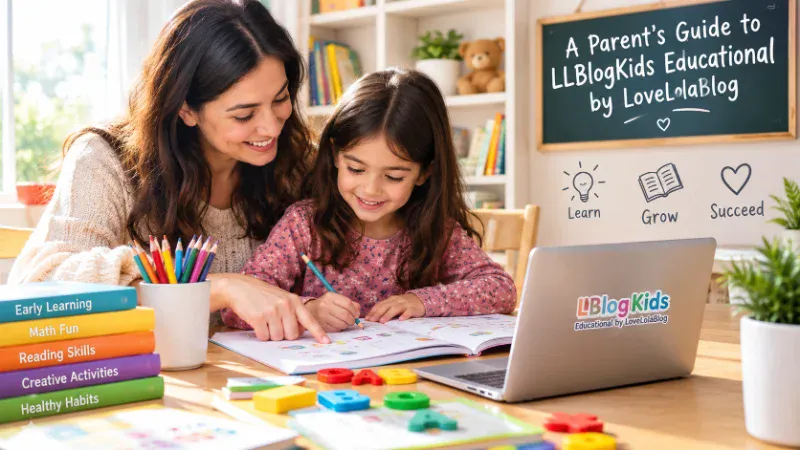
Every child learns in a different way. Some children enjoy reading stories, while others understand new ideas through games, drawing, building, or exploring nature. The challenge for parents and teachers is finding activities that match a child’s interests while helping them develop useful skills. LLBlogKids educational by lovelolablog focuses on making learning more engaging through creative activities, practical guidance, and age-appropriate educational ideas.
A strong learning routine does not require expensive toys or hours of worksheets. With patience, encouragement, and simple daily activities, families can create meaningful learning opportunities at home.
What Is LLBlogKids Educational by LoveLolaBlog?
LLBlogKids educational by LoveLolaBlog is a topic centered on children’s education, interactive learning, and child development. Its main ideas include helping children explore new concepts, practice essential skills, and develop curiosity through enjoyable activities.
Rather than treating education as memorizing facts, parents can connect lessons to everyday experiences. Counting groceries, reading a bedtime story, or observing insects in the garden can introduce valuable concepts in a familiar setting.
The goal is to make learning accessible, enjoyable, and relevant to children’s everyday lives.
Why Play-Based Learning Matters
Play gives children opportunities to experiment, ask questions, solve problems, and practice communication. When adults provide suitable activities and allow children to explore, ordinary playtime can become a useful learning experience.
For example, building a tower with blocks introduces balance, shapes, counting, and basic problem-solving. If the tower falls, children can try different arrangements and discover what works.
Parents can support this process by asking questions such as:
- What could make your tower stronger?
- How many blocks did you use?
- What happens if you put the largest block at the bottom?
- Can you build a different design?
These questions encourage children to explain their thinking instead of simply following instructions.
Practical Educational Activities for Different Ages
Children develop skills at different rates, so choose activities that suit their current abilities and interests.
Activities for Preschool Children
Young children benefit from simple, hands-on experiences that introduce early language, numbers, colors, and shapes.
Try these ideas:
- Color sorting: Ask children to group safe household objects by color.
- Storytime: Read a short picture book and ask what they think might happen next.
- Shape hunting: Look for circles, squares, and rectangles around the house.
- Music and movement: Clap rhythms and invite children to repeat them.
Keep activities short and enjoyable. Follow the child’s interest rather than forcing them to finish every task.
Activities for Children Ages 5–7
Children in this age group can practice early reading, writing, mathematics, and creative thinking.
Create a simple word game using familiar objects. Write words such as “book,” “cup,” and “chair” on cards, then ask your child to match each card to the correct object.
For mathematics, use coins, buttons, or building blocks to practice counting and simple addition. Always supervise young children when using small objects.
Drawing a picture and writing one or two sentences about it can also help children connect creativity with language skills.
Activities for Children Ages 8–10
Older children may enjoy projects that involve planning, research, teamwork, and independent thinking.
For example, ask your child to plan a small garden. They can draw the layout, compare plant sizes, estimate the space required, and record how the plants change over time.
Other useful activities include writing short stories, conducting safe science experiments, solving puzzles, and creating presentations about subjects they enjoy.
These projects connect classroom concepts with practical situations and give children opportunities to explain their ideas.
How Parents Can Build Better Learning Habits
Consistent routines can make learning easier without turning the home into a classroom. A practical approach inspired by LLBlogKids educational by lovelolablog is to focus on manageable goals, regular practice, and positive encouragement.
Start with these habits:
Set small daily goals. Choose one realistic task, such as reading a short story or practicing five math questions.
Create a comfortable learning space. Provide suitable lighting, basic supplies, and a place where children can concentrate.
Encourage questions. When a child asks why something happens, explore the answer together instead of dismissing the question.
Praise effort and progress. Recognize persistence, careful thinking, and improvement rather than expecting perfect results.
Allow breaks. Children need time to rest, move, and enjoy activities unrelated to schoolwork.
For example, a 20-minute reading session followed by a short movement break may work better for some children than one long session. Adjust the routine according to the child’s age, attention, and needs.
Using Technology Without Losing Hands-On Learning
Digital tools can support education when families choose suitable content and remain involved. Reading apps, age-appropriate educational games, and interactive lessons can introduce new topics and provide additional practice.
However, screen-based activities should complement other experiences rather than replace them entirely. Children also need conversation, physical movement, imaginative play, outdoor exploration, and face-to-face interaction.
Before introducing an educational app, check its content, privacy settings, advertising, and suitability for your child’s age. Whenever possible, participate in the activity and discuss what your child learns.
A useful approach is to connect digital learning with a real-world task. After watching a lesson about plants, for instance, help your child observe a seedling and record its growth.
Common Learning Challenges and How to Handle Them
Even motivated children sometimes struggle with concentration, frustration, or difficult assignments. The solution often starts with understanding what makes the task challenging.
If a child loses interest quickly, divide the activity into smaller steps. If reading feels difficult, choose a simpler book and practice together. If mistakes cause frustration, remind the child that improvement takes time.
Avoid comparing siblings or classmates. Every child has different strengths, interests, and learning needs.
If difficulties persist or interfere with everyday learning, speak with the child’s teacher or a qualified educational professional. They can help identify appropriate support.
Frequently Asked Questions
How can I make learning fun for my child?
Use games, stories, creative projects, and real-life activities that match your child’s interests. Offer choices and celebrate progress.
Do educational activities require expensive materials?
No. Books, paper, crayons, household objects, and outdoor observations can support many useful learning activities.
How much time should children spend learning at home?
The appropriate amount depends on age, school demands, attention, and individual needs. Short, consistent activities can be more manageable than long sessions.
What makes LLBlogKids educational by LoveLolaBlog useful for parents?
The topic provides a framework for exploring creative learning ideas, educational games, daily routines, and practical ways to support children’s development.
Conclusion
Helping children learn does not mean making every moment a formal lesson. Small opportunities to read, count, build, question, and explore can support their development over time. Parents can make a meaningful difference by offering suitable challenges, listening carefully, and allowing children to learn at their own pace.
By applying the practical ideas associated with LLBlogKids educational by lovelolablog, families can create a balanced learning routine that combines play, structured practice, creativity, and everyday discovery. The best approach is one that encourages curiosity, builds confidence, and helps each child make steady progress.
For more information, visit our website.